


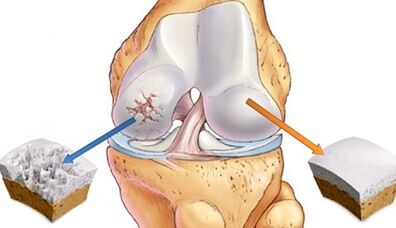
Arthrosis is a degenerative joint pathology accompanied by degeneration processes of cartilage tissue.As the disease progresses, the joint capsule, ligament, synovial membrane and nearby bone structures are also involved in the destructive process.
Occurrence of arthrosis
Most of the people suffering from arthrosis are elderly.The disease after the age of 65 is not only the most frequently diagnosed joint pathology, but also the main cause of loss of working capacity, which later causes disability.Moreover, in old age, mainly the fair sex get sick, but among young people, the majority of patients are men.
The prevalence of osteoarthritis varies greatly from country to country.The reasons for the wide spread of statistical data have not yet been established.
Causes and risk factors
Arthrosis is a disease that can be primary or secondary.If there are no objective reasons for the development of the pathology, then they speak of the primary type.If it is possible to identify the causes of arthrosis, it is called a secondary type.
Secondary arthrosis can be provoked by the following negative factors:
- traumatization of different types of joints (frequent falls, sprains, bruises);
- chronic congenital tissue dysplasia;
- pathological changes in metabolic processes;
- various autoimmune pathologies;
- non-specific inflammatory processes in the joint area;
- some pathologies of the endocrine system;
- chronically occurring degenerative-dystrophic processes;
- various diseases accompanied by excessive joint mobility combined with weak ligaments;
- presence of hemophilia;
- certain types of inflammatory processes.
In addition to the direct causes leading to the development of arthrosis, there are predisposing factors that do not cause the disease in themselves, but may increase the risk of its development.

These are:
- Age over 55 years;
- the presence of excess weight, due to which the load on the joints increases;
- excessive load in any joint or group due to improper sports training, special work requiring a long stay in one position;
- history of surgical interventions on joints;
- heredity;
- hormonal changes in the female body in postmenopause;
- permanent hypothermia;
- untreated pathologies of the spine;
- insufficient food intake of beneficial micro and macro elements.
Development mechanism
The mechanism of the development of arthrosis is quite well known.Cartilage, which provides normal contact between two bones, is smooth by nature, without bumps or roughness, which helps maintain normal joint movement.When the disease occurs, the structure of the cartilage changes, it becomes rough, defects appear on it, reducing the efficiency of natural gliding.
Due to the unevenness acquired, the cartilage is gradually damaged, it becomes calcified in some places, and ossifies in others.In this case, it is possible to isolate small particles that enter the synovial fluid and can damage the surrounding tissues.
As the pathology worsens, the joint may become chronically subluxated, which significantly impairs motor function.
degrees
Doctors divide arthrosis into three main stages:
- my education.It is characterized by the absence of a clear clinical picture.The patient rarely complains of pain in the affected joint, but usually does not consult a doctor.In this case, changes can be observed in the ligament-muscle apparatus and synovial fluid, but there are no visible deformations yet.
- Grade II.The symptoms of arthrosis become more pronounced.The pain is tolerable, but it occurs regularly.The patient consults a doctor because he notices a decrease in his quality of life.A characteristic creaking sound can be heard in the affected joint.Changes are observed in nearby muscle structures as nerve conduction is interrupted.
- Grade III.It is characterized by specific symptoms.The articular cartilage is very thin, cysts, foci of calcification and ossification can be found in it.The ligament apparatus is shortened, which leads to increased mobility in the affected area, which is accompanied by a limitation due to the pronounced inflammatory process.The metabolism of the surrounding tissues deteriorates, which can lead to muscular dystrophy.
In any case, the patient will need clarification of the diagnosis from the attending physician.This is due to the peculiarities of the course of the disease, which is characterized by periods of remission and exacerbation, alternating with each other.
Pain due to illness
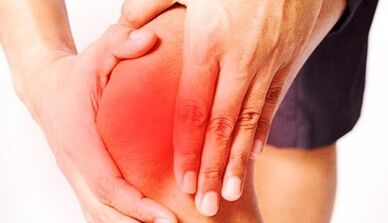
Pain caused by arthrosis is the most common complaint with which patients consult a doctor.Their characteristic is the connection to the time of day, the weather, and physical activity.
In most patients, the pain increases with walking, running, or other physical activity that targets the affected joint.As soon as the load is stopped, the pain gradually decreases.Their development is explained by the fact that the cartilage is no longer able to perform its shock-absorbing functions.
At night, the discomfort most often occurs due to stagnation of blood in the veins.Another reason is the increase in intraosseous pressure during this period.
One of the main diagnostic criteria is the presence of so-called initial pain, which bothers the patient when he has just started active movement.Initial pain usually subsides as physical activity continues.Their occurrence is explained by the presence of joint deposits (detritus), which irritate the nerve endings.Once these deposits are removed from the nerves, the pain disappears.
Symptoms
In addition to pain, doctors also identify other signs of arthrosis that may indicate the presence of pathology.
These are:
- The appearance of a painful and crunching sound.Pain occurs mainly when someone is suffering from hypothermia.At first, the squeaking sound is barely noticeable to the ear, but as the disease progresses without therapy, it becomes audible to those around you.
- Reduced mobility.In the early stages of the development of the pathology, mobility does not decrease.However, the longer the disease remains untreated, the more severe the limitation of movement of the joint becomes.This can be explained by the narrowing of the joint space and the spasm of nearby muscle structures.
- Joint deformity.It is characteristic of the late stage of arthrosis, but it is also an important indicator of the course of the disease.During this period, it is already very difficult to treat the disease.
Which doctor treats arthrosis?
Who treats arthrosis?In most cases, the therapy is carried out by several specialists at the same time.First of all, an arthrologist is involved - a specialist in joints.In addition, the patient should see an orthopedic doctor.If the disease is the result of an inflammatory process, it is still recommended to visit a rheumatologist.
If necessary, other specialists can be involved during the treatment.Most often, you need to use the services of traumatologists, physiotherapists, massage therapists and surgeons.
Diagnostics
Treatment of joint arthrosis begins only after the diagnosis is confirmed and the extent of the pathology is established.First of all, the doctor questions the patient in detail and performs an examination.The presence of characteristic complaints and deformities indicates the existence of the disease.
An obligatory way to confirm the diagnosis is radiography of the affected joint.If the disease has affected the knee, a picture is taken of the knee;if the pathology is found in the hand, they specifically look for X-ray signs of the disease there.
Diagnosis using radiography does not always provide sufficient results to diagnose the patient.In this case, it is sent to MRI (this allows to assess the state of soft tissues and their involvement in the pathological process) or CT (this allows to draw conclusions about the state of bone and cartilage structures, the involvement of nearby anatomical formations in the pathological process).
Treatment
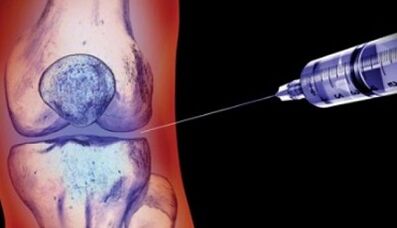
How do we treat joint arthrosis?The selection of the appropriate therapeutic technique depends on the severity of the symptoms and the stage of the disease.
The treatment regimen is selected by the doctor after assessing the general condition of the patient and the course of the disease.Both conservative and surgical treatment methods can be used.
Drug treatment
How to treat the disease, if it is better not to undergo surgery, but to use drugs?
Conservative therapy is suitable only for patients in the early stages of the development of the pathology and includes the use of three main groups of drugs:
- glucocorticosteroids– hormonal drugs are injected into the joint cavity, which effectively relieve the inflammatory process during exacerbation;
- non-steroidal anti-inflammatory drugs,which are mainly used as injections and are injected into the muscles near the joint or directly into the vein.But doctors can also recommend tablets, although this option for taking NSAIDs is undesirable due to the negative effect on the gastrointestinal tract;
- chondroprotectors– drugs belonging to this group can reduce the processes of cartilage tissue destruction and increase regeneration;they are particularly effective in the early stages of the disease.
Surgical
How can arthrosis be cured if the disease has already progressed far enough?In this case, conservative therapy will be ineffective, and doctors can only recommend surgical intervention to the patient.
Today, endoprosthesis is performed in most cases.During the surgery, the real joint is replaced with a prosthesis that performs all the functions of a healthy joint.
In some cases, palliative treatment options are provided, the main goal of which is to reduce the load on the joint surfaces.
Exercise
In the early stages of the disease, it is treated not only with drugs, but also with physical therapy.Physical exercise is an important stage of therapy, which helps maintain the functionality of the joint and reduces the likelihood of further progression of the disease.
Exercises are selected individually, depending on the severity of the pathology and the individual characteristics of the patient.The doctor must take into account the localization of arthrosis, which allows the most effective treatment of the affected tissue.
Self-study without medical supervision is not recommended, especially in the initial stages.Exercises should be chosen so that they are as smooth as possible, without sudden movements.
Practical therapy classes are effective only if the patient spends some time every day to perform the recommended complex.
Traditional methods

Many people with arthrosis refuse to use drugs or surgery until the end.In this case, alternative medicines are used to replace medicines.
The plants most often used in therapy are:
- Kalanchoe;
- ginger;
- horse-radish;
- bay leaf;
- garlic;
- cinnamon;
- horsetail and others.
It is used in the form of tinctures, decoctions and poultices on the affected area.It is important to keep in mind that the full treatment of the disease is impossible only with home recipes.It is best to combine traditional therapy with traditional medicine.
Prevention
What should we do to reduce the likelihood of developing arthrosis in old age?Simple preventive measures are available to anyone.
Recommended:
- daily moderate physical activity: walking, cycling, performing simple exercise sequences as exercise, etc.;
- following the principles of a healthy diet: eat often, but in small portions, avoid fast food, overeating, heavy and fatty foods, eat a lot of spices;
- weight control: weight gain leads to increased strain on the joints, which can lead to the development of arthrosis;
- timely treatment of chronic diseases leading to metabolic disorders;
- use of vitamin-mineral complexes if the amount of nutrients from food is considered insufficient.
The difference between arthritis and arthrosis
Many people confuse arthritis and arthrosis due to the similarity in sound.However, these are completely different diseases.
Arthritis is not called dystrophy and degeneration in joint tissues, but any inflammatory reaction that can develop in the joint cavity, regardless of its cause.The inflammation most often affects not only the joint, but also the muscles, bones and ligaments closest to it.Arthritis pain is not associated with physical activity;it can also bother the patient at rest, and the joints do not crackle at all.

In most cases, it is impossible to independently distinguish arthritis from arthrosis, since the main symptom is pain, and patients rarely know its characteristics in each pathology.
It is better to entrust the establishment of an accurate diagnosis to the attending physician, so as not to make a mistake with the subsequent treatment and prevention of the disease.
Arthrosis is a serious pathology that can lead to disability if the patient does not consult a doctor in time.At the first signs of the disease, it is recommended to consult a specialist, who will confirm the diagnosis and select the most optimal treatment.
If you manage to catch the disease in the early stages of its development, you can probably do without surgical intervention, limiting yourself only to conservative treatment.